Language as a Repository of Lived Experience: Preserving Indigenous Knowledge
Why grammatical documentation must encompass folklore, oral poetry, and cultural memory
Language as Memory and Lived Experience
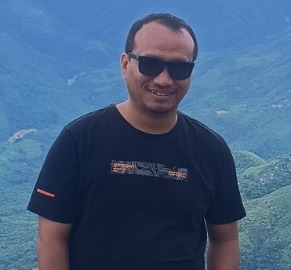
For me, language is more than a system of words and grammar—it is a repository of memory, identity, knowledge, and lived experience. Through my research and writings, I hope to explore these connections and contribute, in my own small way, to the understanding and preservation of Indigenous languages and cultures.
When an elder recounts an oral folktale, a harvesting chant, or a genealogical lineage in Simte or Kaipeng, they are not simply uttering phonemes and morphemes. They are transmitting an intricate repository of ethnobotanical classifications, historical migration memories, ancestral relationships with mountains and rivers, and ethical philosophies refined through centuries of unwritten tradition.
Linguistic field documentation often isolates phonology, morphology, and syntax into abstract formal paradigms. Yet when separated from the living culture and stories of the community, grammar loses its heartbeat. My objective is to bridge rigorous descriptive linguistics with community-grounded intangible cultural heritage.
This website is designed as a digital sanctuary where linguistic science and cultural memory converge—bringing together peer-reviewed morphosyntactic documentation with oral folklore, theological reflection, and literary appreciation.
"Language is more than a system of words and grammar—it is a repository of memory, identity, knowledge, and lived experience."
The Urgency of Documentation in Southern Manipur and Tripura
In many communities across Northeast India, rapid sociolinguistic shifts are underway. As schooling is conducted in English and regional lingua francas, younger generations increasingly communicate through code-mixing, often losing access to nuanced clan terminology, oral folk songs, and traditional ecological vocabularies.
In Simte (~6,728 speakers) and Kaipeng (~15,000 speakers), every elder consultant we interview represents a irreplaceable library of oral history and linguistic nuance. Transcribing these systems into accessible web archives ensures that future generations have direct access to their mother tongue's beauty, structure, and history.